


1. What is the Just-in-Time (JIT) Model?
Just-in-Time (JIT) is a production and inventory management model designed to optimize performance, minimize inventory, and reduce costs. Instead of stockpiling large quantities of raw materials or finished products, JIT allows for material replenishment and production only when there is actual demand.
This process requires rigorous scheduling and effective coordination between suppliers and manufacturers. However, JIT also has vulnerabilities when the supply chain faces disruptions or supply crises.
2. Benefits of JIT
JIT has been adopted by many enterprises, particularly in high-value manufacturing sectors such as automotive and consumer electronics. Key benefits include:
-
Production Process Optimization: Minimizing waste and increasing efficiency.
-
Inventory Cost Reduction: Capital is not tied up in long-term stock.
-
Rapid Response to Customer Demand: Flexible adaptation to market fluctuations.
-
Risk Mitigation: Avoiding inventory obsolescence or overstocking when demand shifts.
Note: The primary drawback of JIT is its heavy reliance on the supply chain. Any disruption in logistics or raw material shortages can lead to severe operational difficulties.
3. How to Mitigate Risks When Implementing JIT
-
Stability Testing: Forecasting potential scenarios and risk profiles.
-
Sharing Best Practices: Enhancing industry-wide collaboration and knowledge exchange.
-
Investment in Training: Empowering the workforce to be agile in the face of change.
-
Cost-Benefit Analysis: Identifying the potential impact of supply chain interruptions.
4. Successful JIT Case Studies
Toyota
Toyota was the pioneer of JIT, implementing it in the 1970s. Raw materials are only received as orders come in, significantly reducing inventory and overhead.
-
Success Factors: Maintaining minimal material buffers at each production station and highly accurate demand forecasting.
Apple
Apple applies a modified JIT approach, leveraging supplier relationships to cut costs and optimize storage. The company maintains only one central warehouse in the US.
-
Success Factors: Suppliers take responsibility for warehousing and the strategic use of dropshipping to minimize costs.
Conclusion
JIT is a high-reward model, but it must be implemented strategically to minimize inherent risks!
INSTITUTE OF SCIENCE AND INNOVATION (IOSIN)
Insight – Partnership – Growth
- Address: No. 15 LK20A Van Phu Urban Area, Kien Hung Ward, Ha Dong District, Hanoi.
- Contact: 0905.423.748 – 024.32 123 140
- E-mail: info@iosin.org
- Website: https://iosin.org
Related Articles

ANNOUNCEMENT: LUNAR NEW YEAR BREAK 2026 (YEAR OF THE HORSE)
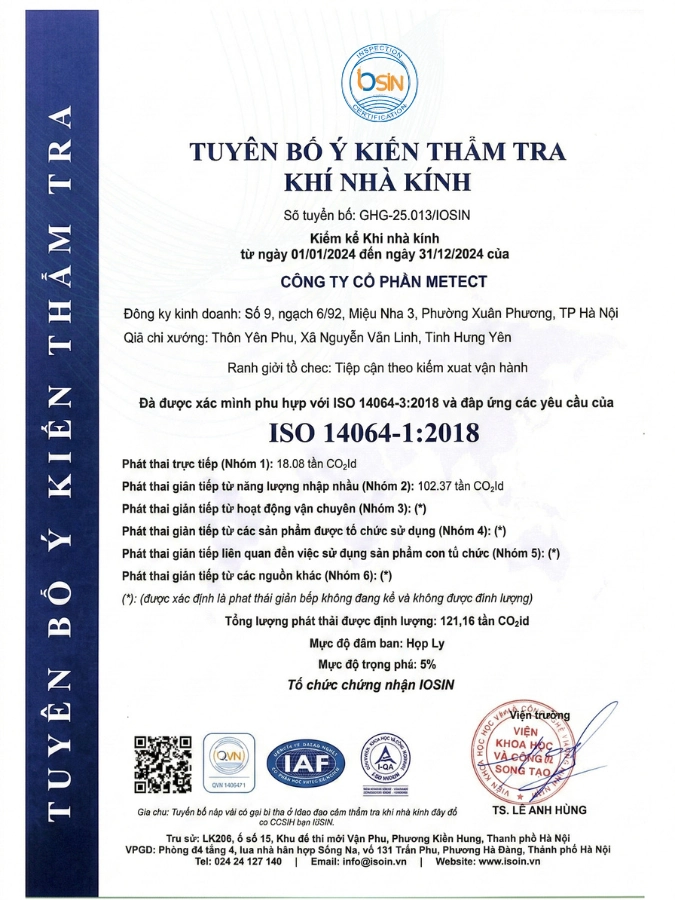
ISO 14064-1:2018 Success: IOSIN supports METECT in GHG Inventory Certification

ISO 9001:2015 Certification Audit Process

Entities Subject to Greenhouse Gas (GHG) Inventory under Decree No. 06/2022/ND-CP

Regulations on the use of Marks
